
factbase世界的开放参考
涵盖国家、能力与全球转变
197国家
National profiles: geography, people, economy and security.
288能力
Defined and rated, domain by domain.
40全球转变
Where the world is moving, with the evidence for and against.
4,666图表
Every metric, for every nation it covers.
Factbase 由 Global Institute for National Capability (GINC) 提供支持。
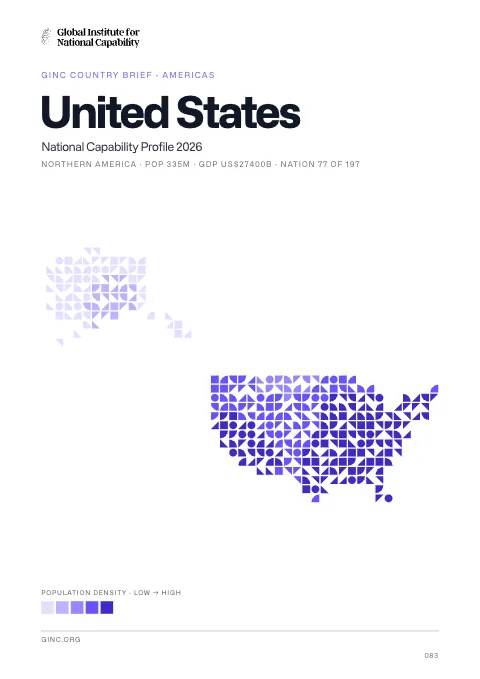
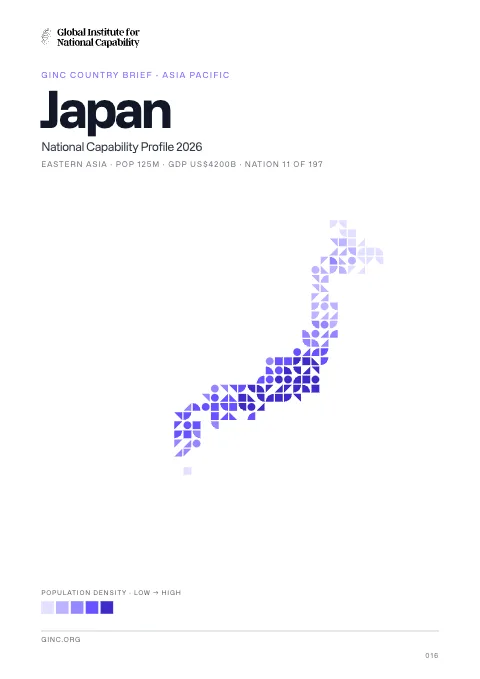
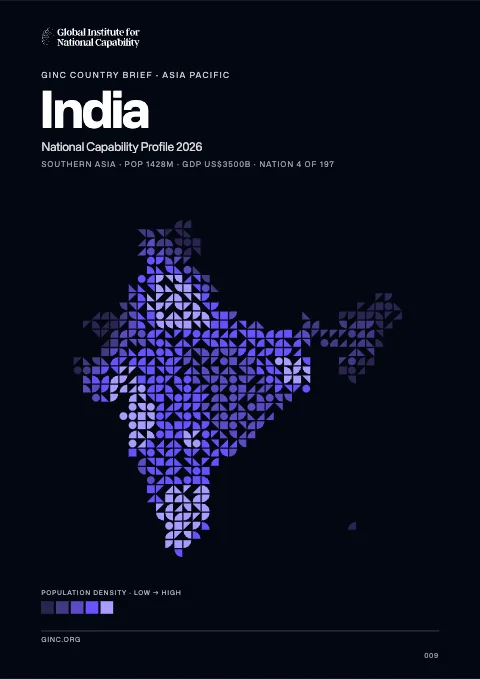
A brief on each of 197 nations
One page per nation, read from top to bottom or by chapter from the rail beside it: where the nation stands, what it can do, and how it is moving.
- Foundations: historical context, geography and environment
- Nine capability domains across hard, soft and economic power
- The GINC indices: capability ratings, trends, developments, trade and more
- A map, the headline figures and their charts, with a PDF edition where one is ready
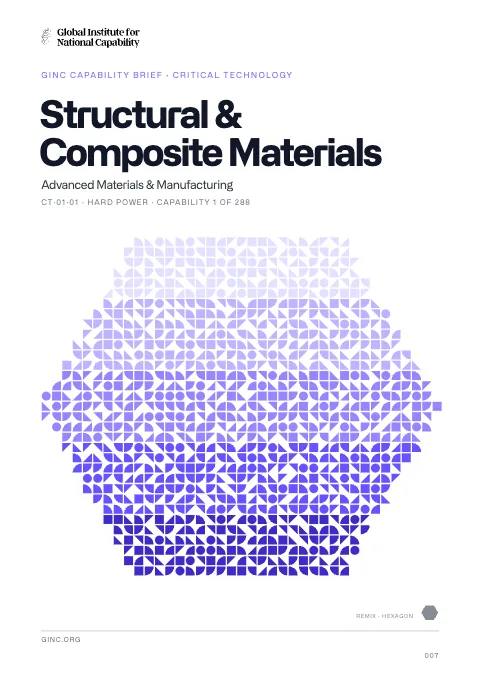
A brief on each of 288 national capabilities
Every capability in the National Capability Framework, in 73 groups and 9 domains, has a brief of its own in the same form as a nation's.
- What the capability is, and how it is measured
- Its history, and the capabilities nearest to it in the framework
- Which nations hold it, and how they are rated
- The developments and trends that bear on it
40 global shifts, with the case for and against
The movements that recur across the flagship publications of the major research institutions, each written as a shift from one condition to another and filed in one frame: five families, from who we are to what comes next, as foundations and systems.
- A headline figure and its source for every shift
- Four time series that support each shift, and two that contest it
- A direction for each: constructive, neutral or a deterioration
4,666 charts, each on a page of its own
Every one of the 50 metrics is charted for every nation it covers, and compared across all of them. Each chart has its own page, with the full series, its unit and its source.
- Embed any chart in your own page with one line of code
- Download it as a PNG or a JPG
- Share a link that opens the chart itself
GDP
Gross domestic product at current prices, in US dollars.
Source World Bank, World Development Indicators · IMF · factbase.org
听听大家对 Factbase 的评价
看看它如何为专业人士、学者、学生与公众带来改变。
The thing I keep coming back for is the source under every figure. I can put a number in a ministerial brief and show exactly which authority published it.
One brief per nation, the same chapters in the same order for all 197. Like for like is the part nobody else gets right.
We structured a whole review on the capability framework: nine domains, 73 groups and 288 capabilities, each with a brief of its own. It replaced a spreadsheet we had been maintaining by hand for four years, and it is better than ours was.
Every Global Shift comes with four charts that support it and two that contest it. It is the first place I have found that shows the case against its own argument, which is exactly what an essay needs.
The trade chapter shows where a nation’s exports go and what they are made of in one diagram. I embed the charts straight into our notes, source line and all.
I set the 40 Global Shifts as a seminar exercise: pick one, then argue from its two contesting charts. Students fill the hour without me, which is exactly what I wanted.
Papers and patent families for each capability, with the ten nations that lead it. I knew who was ahead in batteries, and that the answer differs for research and for patents, before the kettle boiled.
A nation’s brief is laid out by capability group, and the groups line up with how we are organised internally. That sounds small. It saves a translation step on every piece of analysis we publish.
Clean, fast, and it cites everything. Every chart has a page of its own that I can link to or download as an image.
I came for one country and lost an hour. No paywall, no sign-up, and I could read it in my own language.
有疑问?
我们有答案
什么是 Factbase?
一个关于主权能力的开放指数。它对 196 个国家在九大能力领域(涵盖硬实力、软实力与经济实力)进行评级,并把这些领域拆解为 250 多项单独测量的能力,使一国的长处与短板能够在同一口径下比较。
国家是如何评级的?
每项能力都在统一量表上评分,并与其他所有国家对标,再按领域汇总为层级——自 T1(前沿)向下。“前沿”列统计一国拥有多少 T1、T2 与 T3 结果,这决定了总排名。
九大能力领域是哪些?
硬实力下的关键技术、战略基础设施与国家安全;软实力下的人力资本、信息与影响力、治理与廉洁;以及经济实力下的金融实力、生产与创新、投资与贸易。
数据来自哪里?
只采用一手来源:各国统计机构、各部委,以及数据的原始国际机构(联合国、国际货币基金组织、世界银行、国际劳工组织、粮农组织、国际电信联盟、联合国难民署、斯德哥尔摩国际和平研究所、国际战略研究所等)。国家档案中的每个字段都附有自己的来源说明,因此任何数字都可追溯到发布它的机构。
我可以把评级接入自己的工具吗?
可以。底层数据与本站一同以 JSON 发布,GINC 的 MCP 连接器还允许你用日常语言,从自己的大语言模型查询该指数,提出有关国家、领域与具体能力的主权能力问题。
该指数多久更新一次?
主要评级每年发布一次,目前为 2026 年版。底层指标会随来源机构发布新数据而更新,每份国家档案都会标明每个数值对应的年份。